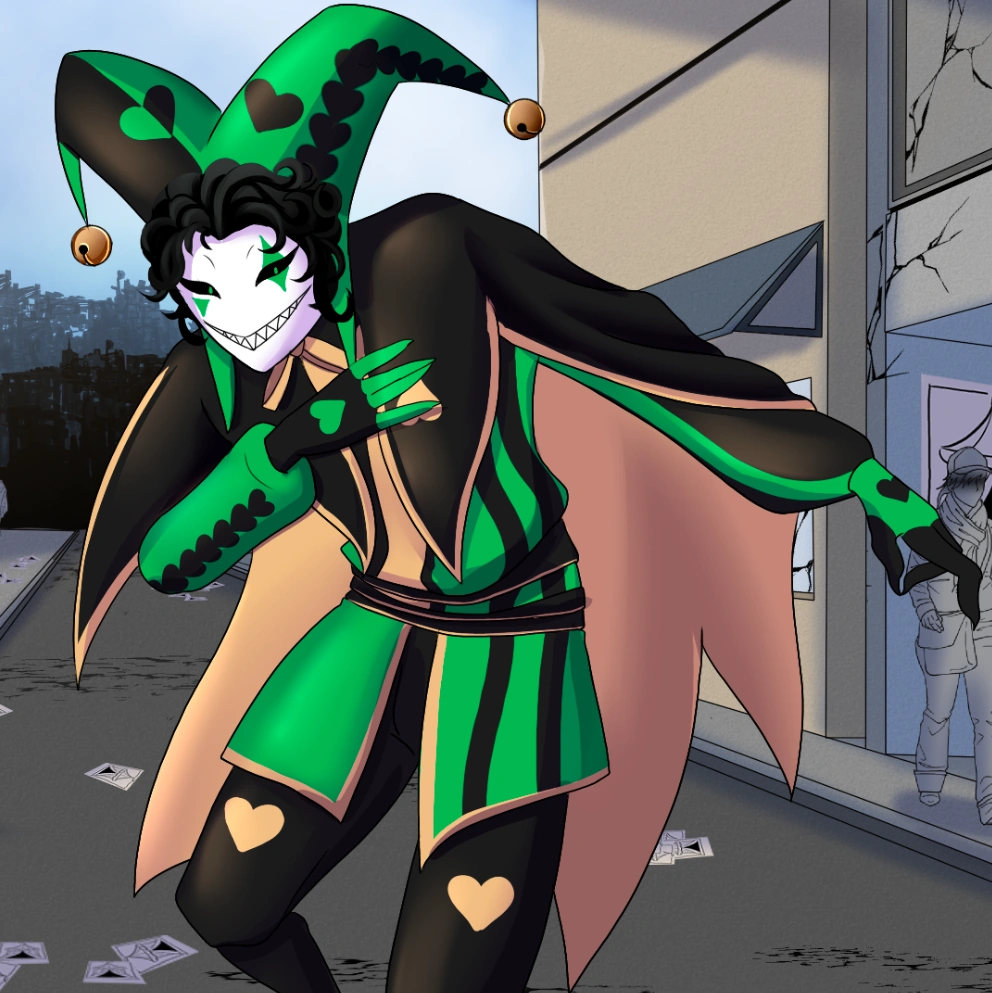
Yandere Deep Dive
How The Freak Circus uses obsessive love as a horror device — and why understanding the yandere is more unsettling than fearing them.
- Genre tag
- yandere (official itch.io tag)
- Pierrot archetype
- Silent yandere — official itch.io description
- Harlequin archetype
- Seductive rival — official itch.io description
- Rating
- 18+ — includes abuse, kidnapping, non-consensual themes
Sources: itch.io official page · itch.io devlog · YouTube full playthroughs
What Makes a Yandere?
The term yandere (ヤンデレ) combines yanderu (mentally ill) with deredere (lovey-dovey). A yandere character loves obsessively — to the point where that love becomes dangerous. The archetype is a staple of anime, manga, and visual novels, and The Freak Circus wears the tag proudly: it is one of the game's official itch.io tags.
What sets The Freak Circus apart from other yandere media is its approach to the why. Most yandere stories derive their horror from the yandere's actions — jealousy, threats, violence. The Freak Circus derives its horror from the yandere's reasons — and understanding those reasons is what makes the game genuinely unsettling.
Pierrot: The Silent Yandere
The itch.io page describes Pierrot as "the silent yandere." Unlike typical yandere characters who declare their obsession loudly, Pierrot watches and waits.
Observed Behaviours
- Sits silently in the café, watching the protagonist work
- Leaves small gifts
- Memorises routines without the player noticing
- Places a bell collar on the protagonist — "my lady"
- Breaks the fourth wall — aware the player is watching
🎮 In-game verified
Archetype Analysis
Pierrot fits the depressive/protective yandere pattern. His obsession manifests as hypervigilance — he believes that if he does not control the environment, it will destroy the one thing he loves. His quiet devotion feels genuine, which is precisely what makes it frightening. The player is meant to understand him, not just fear him.
✓ Community analysis
Harlequin: The Charismatic Yandere
The itch.io page describes Harlequin as "the seductive rival." Where Pierrot is silence and sorrow, Harlequin is noise and chaos. He is charming, witty, and completely transparent about being dangerous.
Observed Behaviours
- Appears as Pierrot's "stage rival" — competes for the protagonist
- Tests the player with dangerous games and challenges
- Rewards boldness; punishes passivity
- Treats love as a game he intends to win
- His "pranks" may be deliberate provocations
🎮 In-game verified
Archetype Analysis
Harlequin fits the narcissistic yandere pattern. He believes only someone strong enough to match him deserves to survive. His love is a test — if you pass, you are his equal; if you fail, you are his toy. The horror comes from realising that his charm is a weapon, and the player chose to be charmed.
✓ Community analysis
Why This Approach Is More Unsettling
Most horror games want you to fear the monster. The Freak Circus wants you to understand it — and then asks whether your understanding is genuine empathy or just another form of control. This is the game's most distinctive thematic achievement.
It Weaponises Your Empathy
The game gives you characters who are genuinely sympathetic — trapped, traumatised, lonely — and then makes their obsessive behaviour a direct consequence of that suffering. You want to help them. Helping them feeds their obsession. There is no clean exit.
No Clean "Good" Ending
Community analysis suggests that even the "good" endings in The Freak Circus are forms of entrapment disguised as romance. The player's choice to stay feels voluntary — but the alternative is often worse. This moral ambiguity is central to the game's emotional impact.
The Fourth Wall as Horror
Pierrot's awareness that he is being watched — by the player, not just the protagonist — turns the player into a participant. You are not just watching a yandere stalk someone. You are the audience the circus performs for.
The Consent Question
The game's content warnings (officially listed on itch.io) include "non-consensual drug use," "physical domination," and "mild non-consensual physical contact." These are not gratuitous — they are the thematic core. The game constantly blurs the line between love and imprisonment.
Comparison to Other Yandere Media
| Element | DDLC | Yandere Simulator | The Freak Circus |
|---|---|---|---|
| Yandere motivation | Self-awareness glitch | Sociopathy | Isolation, trauma, obsession |
| Player agency | Illusion of choice | Full sandbox | Meaningful but morally grey |
| Horror source | Fourth-wall breaks | Player becomes monster | Empathy weaponised |
| Romance vs. horror | Bait and switch | Mostly horror | Simultaneously both |
Tier: community ✓ — this comparison is based on community analysis of all three games. The Freak Circus data points are sourced from itch.io and YouTube playthroughs; DDLC and Yandere Simulator comparisons are based on general community knowledge.
Yandere FAQ
Is The Freak Circus a yandere game?
Yes. The itch.io page explicitly tags the game with "yandere" and describes Pierrot as "the silent yandere." The game explores obsessive love as a central theme, using horror and psychological tension to examine why yandere characters behave the way they do.
What type of yandere is Pierrot?
Based on the official itch.io description and YouTube playthroughs, Pierrot fits the "silent/depressive yandere" archetype. He does not declare his love loudly — he watches, waits, and quietly insinuates himself into the protagonist's life. His obsession is protective rather than aggressive, which makes it more insidious.
What type of yandere is Harlequin?
Harlequin fits the "charismatic/narcissistic yandere" archetype. The itch.io page describes him as "the seductive rival." He is transparent about being dangerous, tests the player because he believes only someone strong enough to match him deserves to survive, and treats love as a game he intends to win.
How does The Freak Circus compare to other yandere games?
Unlike games like Doki Doki Literature Club (which uses fourth-wall breaks for horror) or Yandere Simulator (which is sandbox-based), The Freak Circus approaches yandere through empathy. The horror comes not from the yandere's actions but from understanding their reasons — centuries of isolation, trauma, and brokenness. This makes the experience more emotionally complex than typical yandere media.